
Eau de Toilette vs Eau de Parfum: Which Should You Buy?
Learn the perfume difference between EDT and EDP, including concentration, longevity, projection, climate, testing, value and pre-owned buying checks.
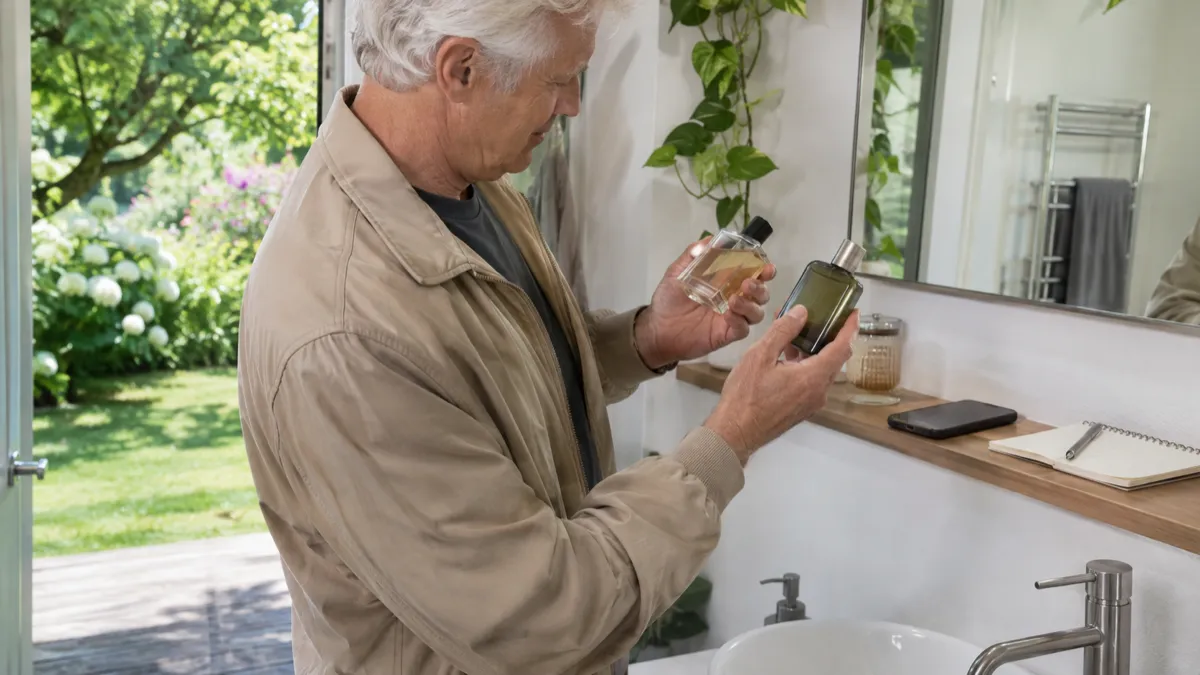
Updated November 16, 2026 · Sources last checked November 16, 2026
Our take
Choose EDT if you want freshness, heat-friendly daytime wear, a lighter office scent, or easy reapplication. Choose EDP when longer wear, fewer touch-ups and a fuller dry-down matter more. For men asking which cologne to buy, the same rule applies: choose the exact smell you enjoy, because concentration is a useful clue, not a guaranteed performance ranking. EDT and EDP are not always identical formulas at different strengths; official Bleu de Chanel and Sauvage product pages show why the exact version should be checked before assuming a simple concentration change.
The short answer in one comparison table
EDT means eau de toilette and EDP means eau de parfum. The patterns below are typical rather than universal: exact formula, ingredients, skin, climate and application can change the result.
| Difference that matters | Eau de Toilette (EDT) | Eau de Parfum (EDP) |
|---|---|---|
| Concentration positioning | Usually positioned as the lighter format | Usually positioned as the higher-concentration format |
| Longevity | Often shorter, but note structure and skin can overturn the rule | Often has a better chance of longer wear, but not guaranteed |
| Projection | May give more lift or brightness at the opening | May feel more sustained without necessarily projecting farther |
| Sillage | Can leave a noticeable early trail that settles sooner | May leave a denser or longer-lasting trail, depending on formula |
| Scent feel | Often brighter, fresher and more transparent | Often fuller, warmer or denser |
| Reapplication | Usually more compatible with refreshing during the day | Often chosen to reduce touch-ups |
| Seasonality | Common starting point for heat, humidity and daytime | Common starting point for cool weather, evenings and long days |
| Best uses | Office, commuting, casual wear, outdoor use and lower-intensity preferences | Signature scent, workday-to-dinner wear, dates and richer dry-downs |
What the labels mean—and what they do not mean
Fragrance is usually an aromatic concentrate carried in alcohol, sometimes with water and other supporting materials. EDT, EDP, parfum or extrait, eau de cologne and eau fraîche are familiar format labels used to describe different positions on a fragrance spectrum, but houses do not apply one universally enforced concentration scale. Treat the label as a useful starting clue, then check the exact product and judge how it smells and wears on you.
Parfum and extrait are commonly presented as denser formats than EDP, while eau de cologne and eau fraîche are commonly used for lighter interpretations. These are approximate industry and product-category conventions, not guarantees about loudness, quality or wear time. “Elixir” is a brand-dependent marketing name, so compare the exact product rather than assuming a fixed position in the spectrum.
Gender does not change the meaning of the label. In men’s shopping language, “cologne” often means any men’s fragrance; it does not necessarily mean the specific Eau de Cologne format. A man can buy an EDT, EDP, parfum or EDC, and the same is true for any wearer.
Why EDT and EDP can smell different
Changing the concentrate ratio changes how quickly different materials evaporate and can alter the balance of the top, heart and base. A house may also adjust ingredients or proportions, producing a related interpretation rather than simply adding oil to an EDT. The result can be a brighter opening, a warmer dry-down, more sweetness, greater density or a different texture.
Bleu de Chanel is a useful example: CHANEL describes its EDT with citrus, aromatic notes, cedar and sandalwood, while the Bleu de Chanel range also includes separate EDP and parfum products. Treat those as distinct products sharing a family identity, not interchangeable strengths.
Dior’s official product descriptions present Sauvage EDT and EDP as related products with different stated scent emphases. That is enough to treat them as separate interpretations rather than assume one is simply a stronger version of the other. Someone may therefore prefer the EDT’s opening even if the EDP remains perceptible longer.
The same caution applies when comparing Dolce & Gabbana Light Blue EDT with its EDP or Intense variants, and Diptyque Philosykos EDT with its EDP. Check the exact official product description before treating a same-name bottle as a simple strength change. A greener, brighter, richer or denser impression may be the reason to choose one version, while community discussions can reveal useful questions but are not controlled performance evidence.
- Do not compare these as the same product: EDT versus EDP flankers, Intense editions, parfum or extrait, and Eau de Cologne may have different compositions rather than simply different strength. Verify the full product name before deciding.
Longevity, projection and seasonality in real use
Longevity is how long you can detect the fragrance. Projection is how far it radiates from you. Sillage is the trail left behind as you move. Dry-down is the later stage after the opening and heart have developed. These are separate questions: a scent can last close to the skin, project strongly at first, or leave a trail without lasting all day.
Higher concentration often supports persistence, but it does not guarantee longer wear. The result also depends on the fragrance’s formula and structure, the wearer’s skin, temperature and humidity, application amount, and whether the wearer becomes nose-blind to the scent. A fresh EDP can fade sooner than a woody EDT, and an EDT can project more strongly during its opening than a denser EDP; these are reasons to test the exact fragrance rather than rely on the label.
Published wear observations vary by fragrance, skin, climate and application, so this guide does not promise universal hour counts. A first spray is evidence about the opening only, and going nose-blind does not prove the fragrance has disappeared.
| Setting | What usually works | Why | Main caution |
|---|---|---|---|
| Hot or humid weather | Fresh EDT or light EDP | Lower-intensity, brighter compositions are often easier to control | Heat can amplify either format |
| Office or shared indoor space | Unobtrusive EDT, EDC or restrained EDP | Lower projection reduces the chance of overwhelming nearby people | Spray amount and formula matter more than label alone |
| Cold weather | EDP or parfum/extrait | Denser bases can feel more comfortable in cool air | A rich scent can still be excessive indoors |
| Evening or date | EDP when its dry-down is appealing; EDT when discretion matters | Longer wear can help, but close settings reward restraint | Do not confuse persistence with permission to overspray |
| Outdoors or commuting | EDT or fresh EDP | Brightness and easy refreshes suit movement and heat | Wind can distort your sense of projection |
| Close-contact setting | Lower-projection version tested on skin | Comfort matters more than maximum reach | Judge at conversational distance |
The choice by situation, not by gender
For one versatile men’s fragrance, this is format-level guidance rather than a recommendation for one named product: choose EDP when you prefer the line’s fuller dry-down and want fewer touch-ups; choose EDT when you prefer its brighter character, live in heat, or share indoor spaces. Bleu de Chanel and Sauvage both illustrate why the exact product page matters, because their brands present separate EDT and EDP offerings rather than one universal strength rule. Light Blue and Philosykos likewise deserve exact-version testing when their related formats appeal for different scent characters. None of these labels is more masculine; they describe the perfume, not the wearer.
For an office, commute, classroom, exercise-adjacent use or sensitivity to strong fragrance, start with a restrained EDT or EDC and apply conservatively. For winter, formal evenings or dates, start with EDP or parfum only if the dry-down feels comfortable at close range. A lighter EDP can work in summer, and a restrained EDT can work in winter; the exact composition matters.
- Choose EDT if…
- You prefer a fresh opening or lower projection.
- You live in heat or humidity.
- You work in a shared indoor space.
- You are comfortable reapplying.
- You are uncertain about a scent and want a lower-risk first bottle.
- Choose EDP if…
- You want fewer touch-ups during a long day.
- You prefer the fuller, warmer dry-down.
- You want one bottle to move from work to dinner.
- You mainly wear fragrance in cool weather or evenings.
- You accept that a denser scent may need fewer sprays.
How to compare two versions fairly before buying
Test EDT and EDP on separate wrists or separate skin areas, using the same number of sprays and recording which is which. Use clean, unscented skin, do not rub, and note the opening immediately. Then revisit after the alcohol burst, again during the middle stage, and later when the dry-down is established.
Judge the opening for first impression and seasonality, but judge the dry-down for the scent you will live with. Compare projection at normal conversational distance and check whether the fragrance remains comfortable in the setting where you expect to wear it. A blotter is useful for screening, but skin is needed for the final decision because warmth, skin chemistry and evaporation change the result.
If the versions are close, test them on separate days to reduce nose fatigue. A sample or decant is the sensible step before a full bottle, especially for an unfamiliar flanker, a pre-owned purchase or a line with multiple reformulations.
- Scent-test worksheet
- Version: EDT / EDP
- Opening: bright, sweet, sharp, smooth or other impression
- 30–60-minute impression: heart and comfort
- Dry-down: the later character you actually want to wear
- Projection: close, moderate or noticeable at normal distance
- Comfort: suitable for office, outdoors, date or shared room
- Reapplication: needed, acceptable or unnecessary
- Decision: preferred smell, preferred behavior, or sample again
Worked comparison: choosing an EDT or EDP of the same line
Imagine a shopper wants one men’s fragrance for a warm commute, a shared office and occasional dinners. He likes the EDT’s brighter opening, finds the EDP warmer, and is willing to reapply after work. Even if the EDP lasts longer, EDT is the rational choice because the preferred smell, climate and projection tolerance solve his daily problem better.
Now change the priorities: the shopper works long days in a cool climate, dislikes carrying a decant, and prefers the EDP dry-down. He accepts a fuller presence and wants the scent to remain part of the workday-to-dinner transition. EDP is justified because both the smell and the usage pattern support it.
This is why “EDP lasts longer” does not end the decision. If the EDP lasts longer but you prefer the EDT smell, choose EDT, reapply lightly, or buy a smaller amount while you confirm the choice. A fragrance that lasts longer but is rarely worn is poor value.
Value without false precision
Compare value through fit, not a supposedly universal price-per-wear calculation. Consider how much you apply, whether you reapply, bottle size, whether you will wear it often, and whether you genuinely prefer the exact scent. An EDT can be better value for frequent casual use when reapplication is comfortable; an EDP can be better value for long days when fewer applications matter.
Do not assume that a higher concentration means higher quality. It may mean a different artistic balance, a denser texture or more persistence, but quality is not measured by the EDT or EDP label. The best-value bottle is the one that fits your routine and gets worn.
| Your priority | Likely better value | Reason |
|---|---|---|
| Frequent casual wear and easy refreshing | EDT | Brightness and reapplication fit the routine |
| One application for a long day | EDP | Fewer touch-ups may matter more than entry price |
| Unsure about the scent | Sample or decant | Avoid paying for a full bottle before judging the dry-down |
| Strong preference for the EDT smell | EDT | Personal enjoyment outweighs concentration |
| Preference for the EDP dry-down and cooler-weather wear | EDP | The fuller interpretation matches the actual use case |
Buying pre-owned or from a listing
The first risk is buying the wrong version, not merely buying an old bottle. Compare the listing’s exact product name with the manufacturer’s official product page and verify the concentration, flanker or Intense wording, bottle size and whether it is a tester. Packaging changes alone do not prove a bottle is fake, so stay with buyer-level checks rather than attempting forensic authentication.
Use clear photos of the bottle, label, cap and atomizer as a practical buyer checklist. Note the remaining fill, any visible leakage or discoloration, the sprayer’s condition, batch or production information where available, and the seller’s stated storage history. If the listing leaves the bottle’s condition or history unclear, request more information or consider a sample first. These checks help you assess condition and fit; they are not proof of authenticity.
If the listing identifies the bottle as a tester, confirm the seller’s description, exact concentration and match with the manufacturer’s official product page. Check the marketplace’s current return terms and any applicable protection, but do not treat a generic programme name as proof that every fragrance listing is covered.
- Pre-owned listing checklist
- Exact concentration: EDT, EDP, EDC, parfum, extrait, elixir or another format.
- Full product name, including flanker, Intense or limited-edition wording.
- Official manufacturer product-page match.
- Bottle size and approximate fill level.
- Bottle, box, cap and atomizer condition.
- Batch or production information where available.
- Storage history and any signs of heat, light exposure, leakage or evaporation.
- Tester status and packaging differences.
- Seller return terms and applicable marketplace protection.
- Sample or known reference scent when the bottle history is uncertain.
What will not work—and the final recommendation
Do not choose EDP solely because it sounds stronger, assume every EDP lasts longer, judge a fragrance from one spray, compare different flankers as if they were identical, or overspray an office because the EDT feels quieter. Do not use current marketplace prices, sold counts or availability as a substitute for deciding whether the scent fits your life.
Choose EDT for freshness, heat, daytime, offices, outdoor use, lower projection and comfortable reapplication. Choose EDP for a fuller dry-down, cooler weather, evenings, long days and fewer touch-ups. Choose parfum or extrait when you want a denser, often closer-wearing interpretation and have already confirmed that its dry-down suits you; choose eau de cologne or eau fraîche when you want a lighter, fresher format and accept that refreshing may be part of the routine. Choose a sample or decant when the exact formula, flanker or pre-owned condition is uncertain.
For independent fragrance buying guidance, browse Mercubic’s [perfume collection](/c/perfume) and read the [disclosure page](/disclosure). Mercubic is independent and may earn a commission from qualifying links; that does not change the recommendation to test the exact version and buy the scent you will actually wear.
Sources
- IFRA — Using the Standards
- CHANEL — Fragrance and Beauty FAQ
- CHANEL — Bleu de Chanel Eau de Toilette
- CHANEL — Bleu de Chanel collection
- Dior — Sauvage Eau de Toilette
- Dior — Sauvage fragrance range
- eBay — Buying with Authenticity Guarantee
- Marie Claire — Best Eau de Toilette Scents, Tested
- Marie Claire — Long-lasting perfumes tested by beauty editors
- Frédéric Malle — Perfume FAQs
- Costco — Fragrance Buying Guide
- Dior — Sauvage Eau de Parfum
- Diptyque — Philosykos Eau de Parfum
- Makeup.com — How to Make Perfume Last Longer
- Marie Claire — Making Perfume Last Longer
Specifications vary by model and reference — always check the individual listing.