
Which Diamond Ring Is Best to Buy? A Clear Guide
Find the best diamond ring for your priorities with clear guidance on shape, sparkle, setting, metal, stone origin, reports and pre-owned condition.
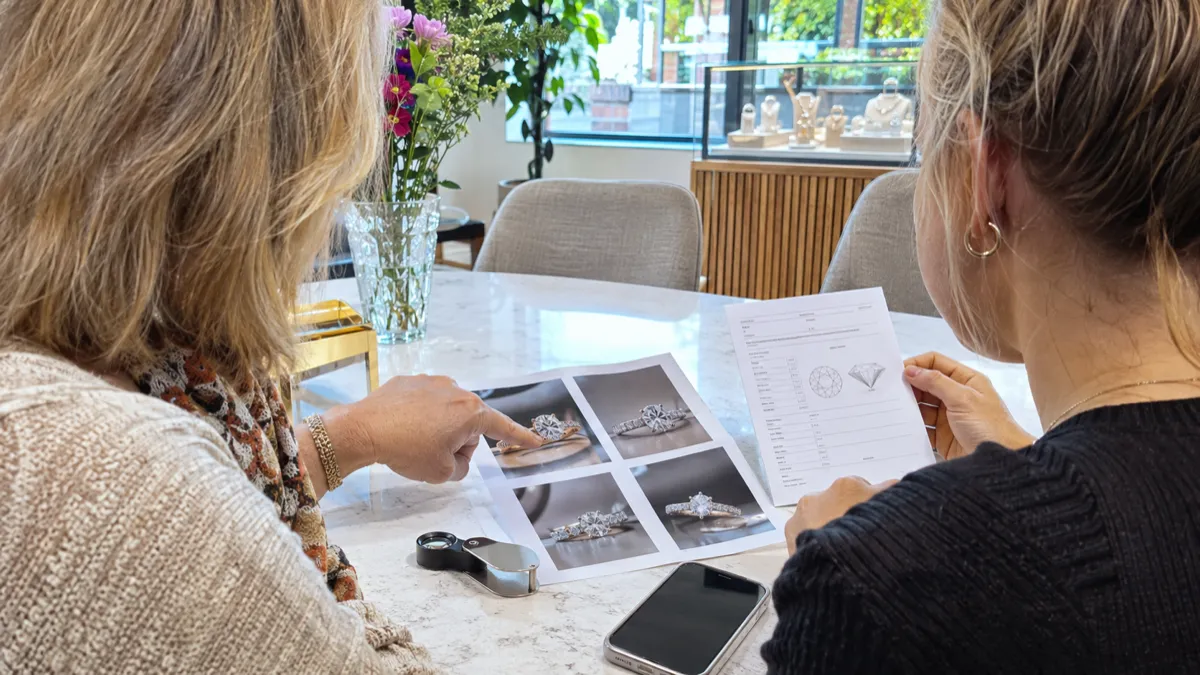
Updated November 15, 2026 · Sources last checked November 15, 2026
Our take
There is no universal best diamond ring. For an undecided classic buyer, choose a well-cut round brilliant in a simple solitaire with a reliable grading report; choose lab-grown when present-day size and design flexibility matter most, natural when geological origin and rarity matter most, bezel or low-profile protection for active wear, and sapphire or ruby when colour matters more than diamond identity.
A grading report makes stones easier to compare, but it does not decide which diamond looks best to your eyes, whether a setting is sound, or what the ring will be worth later. For a pre-owned purchase, the best ring is the one whose stone identity, measurements, condition, metal and return route are all clear.
Start with the decision, not the 4Cs
People searching “which diamond ring should I buy?” are usually trying to solve one of seven different problems: maximum sparkle, more visible finger coverage, a particular origin, secure daily wear, a recognisable style, future flexibility or emotional meaning. Those priorities can point to different stones even when the nominal carat weight is identical.
Use this one-screen path: priority → stone type → shape → setting → metal → documentation → condition. Start with the wearer, then screen out visible problems; do not let a high carat number make the decision before you have seen the stone and setting.
If style is known, match the shape and metal to it. If style is unknown, discreetly ask about metal colour, shape preference, existing jewellery and lifestyle. For active work, put protection and low snag risk before a tall, delicate design. For a pre-owned ring, treat condition and documentation as part of the specification, not as afterthoughts.
- What to ask without spoiling the proposal: Which jewellery metal colour do you wear most? Do you prefer round, elongated, square or step-cut stones? Which rings or necklaces do you wear every day? Do your work or hobbies involve tools, sports, gloves, water or frequent hand impacts?
What the stone actually is: natural, lab-grown, gemstone or simulant
A natural diamond formed in the Earth; a laboratory-grown diamond has the same diamond crystal structure and is made by a technological process rather than mined. Moissanite and cubic zirconia are different materials that imitate diamond. A sapphire or ruby is a coloured gemstone, not a diamond alternative in the material sense, even if it occupies the same ring position.
Natural and lab-grown diamonds can both be beautiful and can both vary widely in cut, colour, clarity and craftsmanship. Natural may be the better fit for someone who values geological origin, rarity, tradition or a particular natural stone identity. Lab-grown may be the better fit for someone who wants more present-day size, clarity or design flexibility. Neither should be treated as a guaranteed investment, and resale depends on the individual stone, ring, market and buyer.
Moissanite and cubic zirconia are different materials from diamond and must be labelled accurately. The listing and paperwork should say natural diamond, laboratory-grown diamond, gemstone or simulant plainly; “created,” “diamond-like” or “simulated” without context is not enough.
| Stone type | What it is | Choose it if… | Main compromise |
|---|---|---|---|
| Natural diamond | Earth-formed diamond | Geological origin, rarity and tradition matter | Origin does not guarantee beauty, condition or resale |
| Lab-grown diamond | Diamond made in a laboratory | You prioritise present-day size, clarity or design flexibility | Origin must be disclosed; resale is not guaranteed |
| Sapphire or ruby | Coloured corundum gemstone | Colour and personality matter more than diamond identity | Treatment and condition need disclosure; colour is central to value |
| Moissanite | Diamond simulant with different chemistry and optics | You want durable sparkle without needing a diamond | It is not diamond and can show a different optical appearance |
| Cubic zirconia | Diamond simulant with different chemistry and durability | You want an inexpensive fashion or occasional ring | It scratches more readily and is not a diamond |
Choose the shape by appearance and wear, not popularity
Shape is the outline; cut style is the facet arrangement. A round brilliant is the clearest baseline for conventional sparkle because its cut has a dedicated grading framework. Fancy shapes can look larger face-up for their weight because their length and width cover more of the finger, but their appearance varies more and usually needs direct visual inspection.
Equal carat weights can have different face-up dimensions because carat is weight, not a promise of length and width. A deep stone can hide more weight below the girdle, while an elongated stone can spread weight across a larger-looking outline. Compare the report’s measurements and the actual photographs or video, not carat alone.
Brilliant-style shapes generally disguise colour and inclusions better than step cuts. Emerald and Asscher cuts use broad, open step facets, so transparency, clarity and colour are easier to notice. Oval, pear and marquise commonly show bow-tie patterns; a broad, dark or persistent bow-tie is a deal-breaker if it dominates the stone. Pear and marquise points need deliberate protection.
| Shape | Sparkle and appearance | Face-up size | What to inspect | Wear note |
|---|---|---|---|---|
| Round brilliant | Bright, lively conventional sparkle | Balanced but not usually the most spread-looking | Cut grade, symmetry, light return | No exposed points; solitaire baseline |
| Oval | Brilliant sparkle with an elongated outline | Often looks large for weight | Bow-tie, outline symmetry, colour in larger stones | Protect the ends through the setting |
| Cushion | Soft outline; brilliant or antique-style faceting | Can look substantial, proportions vary | Facet pattern, crushed-ice versus broad flashes, colour | Rounded corners help, but inspect the actual cut |
| Radiant | Rectangular or square outline with brilliant faceting | Often good coverage | Windowing, crushed-ice pattern, colour and clarity | Corners still need protection |
| Princess | Square brilliant-style appearance | Efficient square coverage | Corner integrity, symmetry and inclusions near corners | Use corner protection; exposed corners are vulnerable |
| Emerald | Geometric broad flashes and hall-of-mirrors effect | Long outline can look substantial | Transparency, windowing, colour and clarity | Bezel or protective prongs help |
| Asscher | Square step-cut, architectural flashes | Usually less spread-looking than elongated brilliants | Transparency, dark areas, clarity and colour | Corners need protection |
| Pear | Brilliant sparkle with rounded end and point | Often looks elongated and large | Bow-tie, symmetry, point inclusions and protection | Point should have a secure prong or bezel |
| Marquise | Long brilliant outline with strong finger coverage | Often looks especially large for weight | Bow-tie, symmetry, point condition and colour | Both points need protection |
The 4Cs: where each grade changes real life
Cut is how facet proportions, symmetry, polish and craftsmanship control light return and the balance of brightness, fire and scintillation. For a round brilliant, cut grade is a useful first filter; for fancy shapes, the report may not provide an equivalent universal cut grade, so the actual stone matters more.
Colour is the amount of body colour on the grading scale, but what you see depends on size, shape, lighting and metal. A warmer diamond can look more noticeable in white metal and less obvious against yellow or rose gold, while step cuts tend to reveal colour more openly. Clarity records inclusions and blemishes under magnification; a visible inclusion, a transparency problem or an inclusion near a vulnerable point matters more than chasing a higher letter that looks identical in normal wear.
Carat is weight, not face-up size. Prioritise the cause-and-effect chain: facet design affects light return; colour interacts with stone size and metal; inclusions affect transparency or durability depending on position; weight affects size only through the stone’s proportions. Eliminate visible problems first, then choose the highest grades that look right to you. Fluorescence and treatments deserve attention when the report documents them, especially if the listing language is vague.
Settings: sparkle, protection and future practicality
A setting changes the look of the ring and the way a buyer should inspect and maintain it. Open prongs leave more of the stone visible, while halos add surrounding sparkle and make the centre appear larger; both choices should be checked for secure, undamaged construction. Three-stone rings add side-stone presence and a wider visual design, so confirm that the side stones, settings and shank are sound before purchase. For any design where future resizing or replacement stones may matter, ask a qualified jeweller before buying.
Bezel and low-profile designs place more metal around the stone and keep less of it above the finger, so they are a sensible conditional choice when snag resistance and edge protection matter. The trade-off is that less of the stone may be visible from the side, and a jeweller should confirm how the construction can be serviced or resized. Pavé and channel settings concentrate many small stones in the shank or shoulders, so ask a qualified jeweller how repairs or sizing would affect that pattern; vintage-style rings deserve the same inspection for worn settings, old repairs and thin shanks.
Independent evidence is strongest for the stone’s appearance, not for a universal setting winner. In its study of oval-, pear- and marquise-shaped diamonds, GIA compared how observers perceived patterns such as bow-ties and crushed-ice faceting, reinforcing the practical rule to inspect the actual fancy shape rather than infer beauty from its name or carat weight. That evidence supports visual screening; it does not establish that one setting is safest for every wearer.
For settings and metals, treat the matrix as conditional buying guidance: the more exposed, intricate or previously repaired the construction, the more important a qualified jeweller’s inspection becomes. Ask specifically about prong security, shank thickness, accent-stone settings, plating or patina, and whether resizing would disturb the design.
| Setting | Light and appearance | Protection and snag risk | Repair or resizing implications | Best fit |
|---|---|---|---|---|
| Solitaire/prong | Maximum focus and strong light exposure | More exposed; tall versions can snag | Usually flexible, but prongs need inspection | Classic sparkle and simple future changes |
| Halo | More surrounding sparkle and centre-size effect | Many small stones; moderate snag risk | More accent-stone maintenance | Size-focused or ornate style |
| Three-stone | Side stones add width and meaning | More edges and stones to protect | Matching and resizing can be complex | Symbolic, balanced design |
| Pavé | Continuous glitter around the centre | Delicate small stones and shared metal | Repairs and resizing need care | Dressier wear with maintenance tolerance |
| Channel | Clean, protected row of accents | Less exposed than pavé | Sizing can affect the channel | Structured band style |
| Bezel | Metal rim protects edges and lowers profile | Very secure and snag-resistant | Service and resizing can be more specialised | Active wearer or exposed-point shape |
| Low-profile | Stone sits closer to the finger | Good for gloves, tools and knocks | Check wedding-band compatibility | Hands-on lifestyle |
| Vintage-style | Character, engraving and distinctive workmanship | Condition varies; old prongs may be worn | Repairs may require specialist matching | History and individuality |
Metals: choose for colour, maintenance and serviceability
Platinum is naturally white, while white gold is commonly rhodium-plated for a brighter white finish; that coating can wear and may need attention over time. Yellow and rose gold create a warmer visual contrast, so compare the actual diamond and surrounding design rather than assuming a colour effect from the metal name alone. For daily wear, inspect the ring’s marks, finish, prongs and shank condition, and ask a jeweller about repair compatibility with the construction.
Verify the hallmark and ask a jeweller what alloy the particular ring contains rather than relying on colour alone. The practical choice depends on the wearer’s preferred tone, existing jewellery, skin sensitivity, desired feel and tolerance for finish maintenance. On a pre-owned ring, inspect the marks alongside thinning, dents, worn plating, repaired joints and prongs; a stamp is evidence to check, not a substitute for condition assessment.
Metal choice is also a reason to inspect the actual ring rather than rely on its colour or description. Read the marks, inspect wear and repairs, and confirm that a qualified jeweller can work on that construction. Existing jewellery is a useful compatibility check for colour and fit, but it is not proof that two rings use the same alloy or will wear identically.
| Metal | Colour and visual effect | Wear and maintenance | Choose it if… |
|---|---|---|---|
| Platinum | Naturally white; cool contrast | Can develop patina; substantial feel | You want white metal without relying on plating |
| 14k white gold | White appearance may involve plating | Inspect plating wear and prong condition | You want a practical white-gold balance |
| 18k white gold | Richer precious-metal content with white appearance | Plating and wear still need inspection | You prefer a richer alloy and white-metal look |
| Yellow gold | Warm contrast | Can show scratches and patina; usually serviceable | You like warmth or want to soften visible diamond colour |
| Rose gold | Pink-warm contrast | Colour and alloy condition vary; inspect actual piece | You want a distinctive warm tone |
| Other metal or mixed metal | Depends on alloy and construction | Confirm marks, compatibility and repair options | The design or existing jewellery makes it necessary |
How to read the report and listing
An independent grading report documents identity and relevant characteristics such as measurements, shape and cutting style, carat weight, colour, clarity and, depending on the stone and report type, cut, polish, symmetry, fluorescence, treatments and an inscription. It is not an appraisal, a retail price opinion or a promise that the ring will retain value.
For a listed ring, verify the report number on the issuing laboratory’s website. Match the report’s shape, measurements, carat weight and colour or clarity details to the listing; compare the inscription where present and ask for photographs or video of the actual stone. Mounted stones can be harder to inspect fully, so ask what was examined and whether the report is for the centre stone or the finished jewellery.
The listing should explicitly identify natural versus laboratory-grown diamond and disclose treatments. Pause on “diamond-like,” “simulated,” “created” or “enhanced” wording without a clear material description. Missing reports are not automatically proof of a bad ring, but they shift the burden to stronger photos, transparent seller answers, a return route and professional inspection.
Report versus appraisal: use the laboratory report to compare the stone’s documented characteristics and identity. Use a separate appraisal only when an insurer or another stated purpose requires a value opinion; neither document removes the need to judge the actual stone, setting condition and return protection.
- Report and listing check: verify the report number; match shape and measurements; match inscription if present; confirm natural, lab-grown, gemstone or simulant wording; read treatment comments; compare the actual photos and video; confirm the report applies to the centre stone; keep the return terms and all correspondence.
- Report versus appraisal: a grading report documents a stone’s reported identity and characteristics; it is not itself a valuation or a guarantee of beauty, market demand or future resale. If you need a value for insurance or another stated purpose, ask a qualified appraiser what documentation is required.
Buying pre-owned: condition is part of the ring’s specification
A pre-owned or vintage ring can be the better choice when the design, workmanship or history matters more than having a new setting. It can also arrive with worn prongs, a thinned shank, past resizing, missing accent stones, replating or an old repair that is invisible in one flattering photograph. Treat the ring as a used mechanical object with a gemstone attached.
For an eBay purchase, request clear, current photographs from the top, side, underside, gallery and inside of the band, plus report details and metal marks. Ask whether the ring has been resized, repaired, cleaned, replated or treated, and insist on a practical return route. If the ring matters financially or emotionally, arrange an independent jeweller or gemologist inspection promptly after delivery.
- Listing review: centre-stone identity stated clearly; report number and issuing laboratory supplied; measurements and photos agree; treatment information supplied; metal marks visible; ring size stated; prongs and gallery shown; shank shown from several angles; accent stones accounted for; repairs, resizing and plating disclosed; return terms understood.
- In-person inspection: check for loose stones, bent or thinning prongs, worn gallery rails, dents, deep scratches, shank thinning, cracks, missing accents, uneven symmetry, worn plating and signs of previous sizing. Confirm the ring sits securely, the stone is not visibly chipped, and the final size and future resizing options suit the wearer.
A worked choice for four different buyers
The undecided classic buyer should choose a well-documented round brilliant solitaire, usually in a white or yellow metal that matches existing jewellery. The priority is predictable conventional sparkle and a simple setting that is easy to understand and service. Accept a modest compromise in colour or clarity if the actual stone remains bright and eye-clean; reject visible dullness, a vague report or a damaged setting.
The size-focused lab-grown buyer should start with an elongated oval, radiant or marquise, then compare face-up measurements and video rather than chasing carat weight. A halo can amplify the visual effect, but a clean solitaire or bezel may be easier to maintain. Accept variation in facet pattern and a careful bow-tie screen; reject a dark persistent bow-tie, windowing, unclear lab-grown disclosure or mismatched documentation.
The active wearer should favour a bezel or low-profile setting, a protected round, cushion, radiant or emerald shape, and a sturdy metal that works with existing jewellery. The priority is secure retention and low snag risk, not maximum exposed sparkle. Accept less side light and a simpler silhouette; reject high-set prongs, delicate pavé, exposed pear or marquise points and a ring with worn prongs.
The origin-focused or vintage-character buyer should choose the documented natural stone or the pre-owned ring whose history and workmanship are clear. A step cut, old-style cushion or vintage setting may be more meaningful than a modern maximum-sparkle design. Accept patina and specialist servicing when the condition is understood; reject missing origin information, untreated-looking damage, undocumented repairs or a report that cannot be matched to the stone.
What will not work well—and why
Choosing carat before appearance can produce a deep, dark or poorly spread stone that looks smaller or less lively than expected. A report grade alone cannot show whether you personally dislike an oval’s bow-tie, a step cut’s transparency, a cushion’s facet pattern or a setting’s awkward proportions.
Ignoring bow-tie or windowing is risky because dark areas or see-through zones may remain visible as the ring moves. A tall setting may snag more easily, while delicate pavé may need closer inspection after impacts; suitability depends on the construction and the wearer’s routine. Assuming all pavé resizes easily is also unsafe: ask a qualified jeweller how a proposed size change could affect the pattern or accent stones.
Accepting unclear origin can leave you with a ring that is not what you thought you bought. Treating a grading report as an appraisal creates false confidence about resale. Buying a damaged pre-owned setting without inspection can turn an attractive design into an immediate repair project.
Final buying checklist and recommendation by situation
Make the decision in order: define the wearer’s priority; choose natural, lab-grown, gemstone or simulant; compare shape and face-up measurements; inspect cut performance; choose setting protection; match metal colour and maintenance; verify the report and origin wording; inspect condition; confirm size, resizing, insurance and repair options; keep the report, receipt, photos and appraisal or insurance documentation after purchase.
Ring size deserves care: confirm the current size, ask whether the design can be resized, and remember that settings with continuous channels, intricate pavé or complex vintage construction may limit easy changes. Before arranging insurance, ask the insurer what documentation it requires to identify the ring and stone. Future repairs should also be considered before buying a delicate setting.
- Situation-based recommendation: classic sparkle — round brilliant solitaire; visible size — elongated oval or radiant after visual screening; natural origin — documented natural diamond with a report; active wear — bezel or low-profile setting with protected edges; colour — sapphire or ruby, with treatment disclosure; unknown preferences — discreetly ask about metal, shape and lifestyle, then choose a versatile low-maintenance design; pre-owned or vintage character — buy only when condition, documentation, size and return protection are clear.
- Before checkout: stone type explicit; report verified; measurements matched; actual photos supplied; bow-tie or windowing assessed; clarity and colour judged in the setting; prongs and shank inspected; metal marks checked; size and resizing understood; treatment and repairs disclosed; return route confirmed; independent inspection planned; documentation saved.
- Mercubic is independent, and recommendations are editorial. See the [independence and commission disclosure](/disclosure) and browse [jewelry](/c/jewelry).
Sources
- GIA — How to Buy a Diamond
- GIA — Buying a Quality Diamond
- GIA — Diamond Cut Grade
- GIA — Diamond Quality Factors
- GIA — How to Read a Diamond Grading Report
- IGI — Diamond Reports
- IGI — Lab-Grown Diamond Report
- FTC — The Many Facets of Advertising Diamonds With Clarity
- GIA — Simulants, Moissanite and Lab-Grown Diamonds
- GIA — Observations of Oval-, Pear-, and Marquise-Shaped Diamonds
- GIA — Guide to Diamond Engagement Ring Shapes
- GIA — Sapphire Care and Cleaning Guide
- Jewelers of America — Jewelry Repair and Care
- Jewelers of America — An Introduction to Pavé, Tension, and Flush Settings
- Jewelers of America — Jewelry Repair
- Jewelers Mutual — How to Insure Your Engagement Ring
- Jewelers Mutual — Getting a Jewelry Appraisal for Insurance
- Diamond Consulate — How to Choose a Diamond
- DiamondTheGuide — Engagement Ring Buying Guide
- Hispek Diamonds — Engagement Ring Buying Guide
- eBay — Jewelry Authenticity Guarantee
- Jewelers of America — Gold Jewelry
- GIA — Buying Guide for White, Yellow, and Rose Gold Engagement Rings
Specifications vary by model and reference — always check the individual listing.