
Air Jordan 1 buying guide: High, Mid and Low
Compare Air Jordan 1 High, Mid and Low sneakers with practical advice on fit, materials, condition and authentication before buying.
Updated October 29, 2026 · Sources last checked November 13, 2026
Our take
Choose the High if ankle coverage and the original-inspired shape matter most. The Mid is the sensible first pair for everyday wear, while the Low suits buyers who prefer an open ankle and simpler casual styling. For pre-owned pairs, prioritize accurate sizing, honest condition photos and a protected checkout over the cut alone.
The three cuts make different compromises
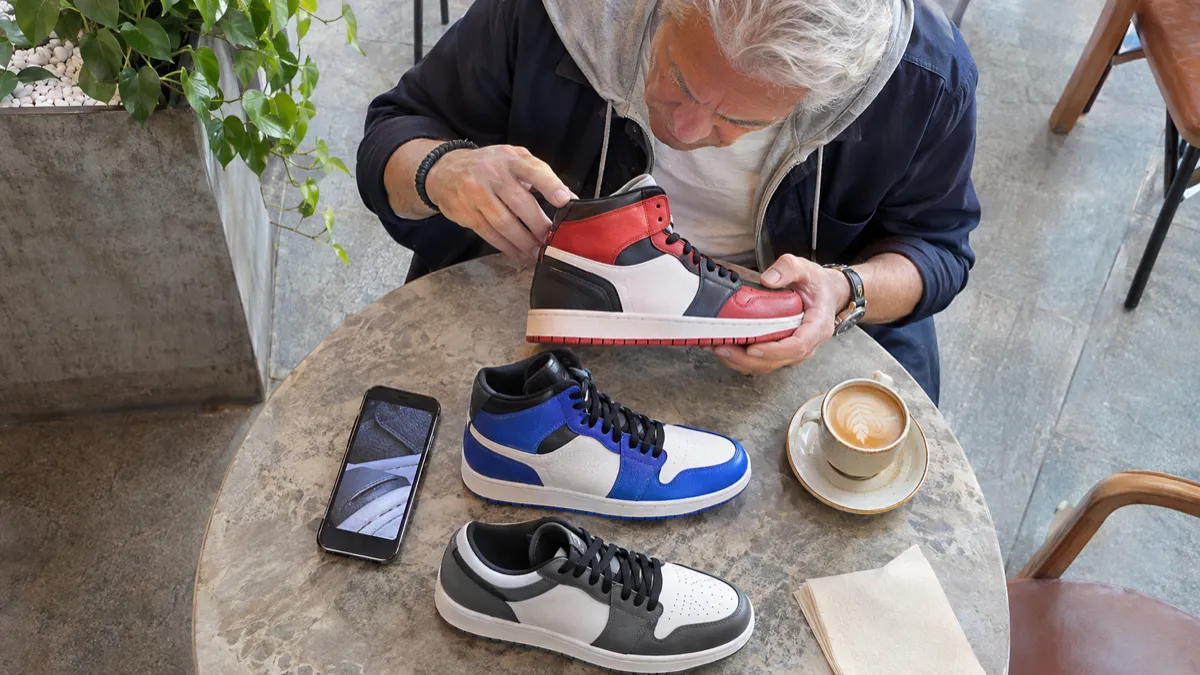
High, Mid and Low are the three core Air Jordan 1 heights, a distinction also recognized in Sneaker News's overview of the model. The High gives the most ankle coverage and the most structured visual profile, but its taller upper can feel more involved with low socks or slim trousers. It is the choice for buyers who want the most traditional-looking AJ1 outline.
The Mid keeps the familiar panelled design while stopping lower around the ankle. Nike's current Mid specification lists a leather, synthetic leather and textile upper, plus a foam midsole, Nike Air cushioning and a rubber outsole with a pivot circle. That makes it a straightforward compromise for someone who wants the recognizable shape without the full height of a High.
The Low has the most open ankle and the lowest visual line. Nike's current Low page describes a low collar, genuine-leather upper, Nike Air technology and a solid rubber outsole. It is easy to pair with shorts or cropped trousers, and it avoids the extra collar material that some buyers simply do not enjoy.
| Version | Best fit for | Main trade-off |
|---|---|---|
| High | Traditional shape and ankle coverage | Taller, more structured upper |
| Mid | Balanced everyday wear | Less of the High's full profile |
| Low | Open-ankle casual styling | Less coverage and visual weight |
Height does not guarantee better materials
The cut is not a universal quality ranking. Materials vary by exact colourway and edition, so compare the particular style code rather than assuming every High is better made than every Mid or Low. Nike's current Mid page names leather, synthetic leather and textile, while its current Low page specifies genuine leather; those descriptions apply to those exact products, not to the entire AJ1 range.
Material affects how a used pair ages. Smooth leather can show creasing and surface cracking clearly; suede and nubuck need more careful handling; patent leather develops pronounced creases; and textile panels can stain differently from leather. Ask for close photographs of the toe box, eyestays, heel overlays and tongue instead of relying on a broad condition label.
For pre-owned shoes, the outsole often tells you more than the box. Look for flattened tread, uneven heel wear, separation around the midsole and signs of repair. A replacement insole or spare lace set is not automatically a problem for daily wear, but it should be disclosed. Collectors may care about original packaging and accessories more than someone buying a pair to walk in.
Start at your usual size, then account for width
GOAT's July 2024 Air Jordan 1 fit guide treats High, Mid and Low versions as generally true to size. It suggests going down half a size for a narrower, snugger fit and up half a size for wider feet or more room, while noting that earlier AJ1 releases can feel snugger than recent ones. Your usual Nike size is therefore a useful starting point, not a guarantee.
Nike's current product pages display men's and women's size equivalents, but the label alone cannot predict how a particular foot will feel. If Nike sneakers usually press against your forefoot, look for the seller's insole measurements or try the same cut in person. More length may relieve pressure, but it can also create heel movement and extra creasing.
Pre-owned fit deserves extra caution. Ask whether the pair was worn with thick socks, whether an aftermarket insole was added and whether the heel lining has compressed. Confirm the tagged size, style code and intended men's, women's or youth sizing against the exact model shown in the listing; do not assume that similar-looking AJ1s share identical fit or construction.
Condition is part of the purchase
On a new pair, compare the box label, interior size tag, colour description and photographs before treating the listing as complete. Small glue marks or minor finish variation can occur, but a mismatched box, missing accessories or visible factory damage should be reflected in the description and in your decision to keep the pair.
With pre-owned AJ1s, separate ordinary wear from problems that affect use. Creasing is expected on many worn pairs. Cracked leather, split rubber, detached soles, a collapsed heel counter, heavy odour and deep outsole wear deserve much more attention. A clean upper cannot compensate for a failing sole, and original packaging cannot restore structural condition.
Request or inspect clear images of both toe boxes, both heels, outsole bottoms, interior size tags, insoles, tongue labels and the box label. Check for stains, dye transfer, repairs and replacement parts. If photographs hide the areas that receive the most wear, treat that as missing information rather than assuming the shoes are clean.
- Before buying, check:
- The exact model, colourway and style code match the photos.
- The tagged size and box label agree.
- Toe boxes, heel lining, outsole, midsole and interior are visible.
- Creasing, stains, repairs, odour and replacement parts are disclosed.
- The listing shows its return terms and any Authenticity Guarantee checkmark.
Authentication needs more than a glance
A buyer-level inspection is useful, but no single visual trick proves an AJ1 is genuine. Releases vary in materials, labels, stitching, packaging and small construction details. Walk away from listings with vague photographs, conflicting style information, pressure to pay outside the platform or a seller unwilling to provide ordinary close-ups.
For qualifying purchases, eBay routes the shoes to specialist reviewers before delivery. They check whether the item and listed extras match the order and assess authenticity; eligibility and exact handling vary by listing. The Authenticity Guarantee checkmark appears on qualifying listings, so check the individual listing rather than assuming every Air Jordan 1 receives the service.
eBay also says some modified or incorrectly categorised items may not receive the full authentication service, and purchases made outside the eligible checkout route are excluded. If authenticity cannot be verified, or the condition does not match the listing, eBay says the item is not sent on and the buyer receives a refund. Read the listing's return terms separately, because authenticated purchases can have different return limits.
Buy the version that matches your wardrobe
The Mid is the safest recommendation for a first AJ1: it keeps the familiar design, works across casual outfits and avoids the full height of the High. Pick the High when ankle coverage and the original-inspired silhouette are central to the appeal. Pick the Low when you want an uncomplicated everyday sneaker with an open ankle and less visual bulk.
Nike's current Mid and Low pages both describe Nike cushioning, but their listed construction is not identical: the Mid combines a foam midsole with Nike Air cushioning, while the Low specifies Nike Air technology and a solid rubber outsole. For buying purposes, the more important question is whether the particular pair is intact, correctly sized and comfortable for your foot.
The U.S. Consumer Product Safety Commission's recall database was checked for Air Jordan 1 safety notices; no specific Air Jordan 1 recall was identified for this guide. That does not replace checking the listing, packaging and current safety information for an unusual or modified pair.
For any pre-owned purchase, favour clear identification, honest condition photos and a protected payment process over a supposedly perfect bargain.
Sources
- Nike Air Jordan 1 Mid product page
- Nike Air Jordan 1 Low product page
- GOAT Air Jordan 1 Size and Fit Guide
- eBay Buying with Authenticity Guarantee
- Sneaker News Air Jordan 1 pricing and model overview
- CPSC Recalls and Product Safety Warnings
Specifications vary by model and reference — always check the individual listing.